





Drought adds to mounting disruption in the Strait of Hormuz, Red Sea and Black Sea, leaving four strategic maritime chokepoints under pressure at the same time.
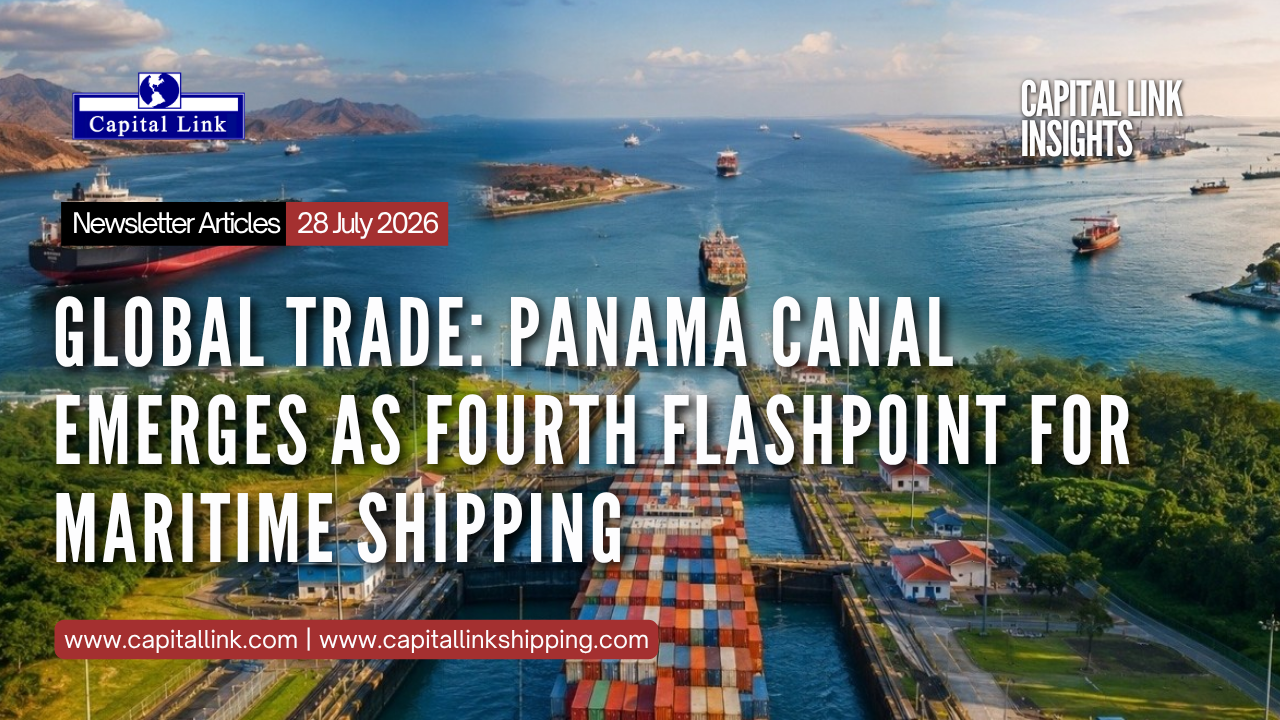
The Panama Canal has become the latest source of disruption for global shipping, adding a climate-driven challenge to a market already strained by conflict in three of the world’s most critical maritime corridors.
Unlike the Strait of Hormuz, the Red Sea and the Black Sea, where military tensions continue to reshape trade flows, the latest threat comes from falling water levels. Below-average rainfall has forced the Panama Canal Authority to reduce daily transit reservations from 36 to 34 vessels and introduce temporary changes to its auction system for transit slots.
On its own, the move would represent another operational obstacle for shipowners. Its significance is in its timing.
For the first time since the wave of geopolitical instability began, four strategic gateways for global trade are simultaneously under pressure. As routing options narrow, local disruptions carry a greater risk of spilling over into the global economy.
The developments in Panama revive memories of the canal’s previous drought crisis, when transit restrictions created lengthy vessel queues and forced shipping companies onto longer, more expensive routes.
Unlike most shipping lanes, the Panama Canal depends on vast quantities of freshwater for every transit. Water levels in its reservoirs therefore determine not only environmental conditions but also the number of vessels that can pass through each day.