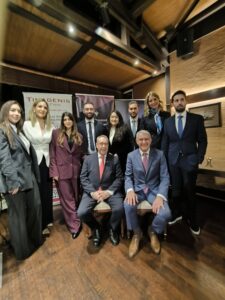






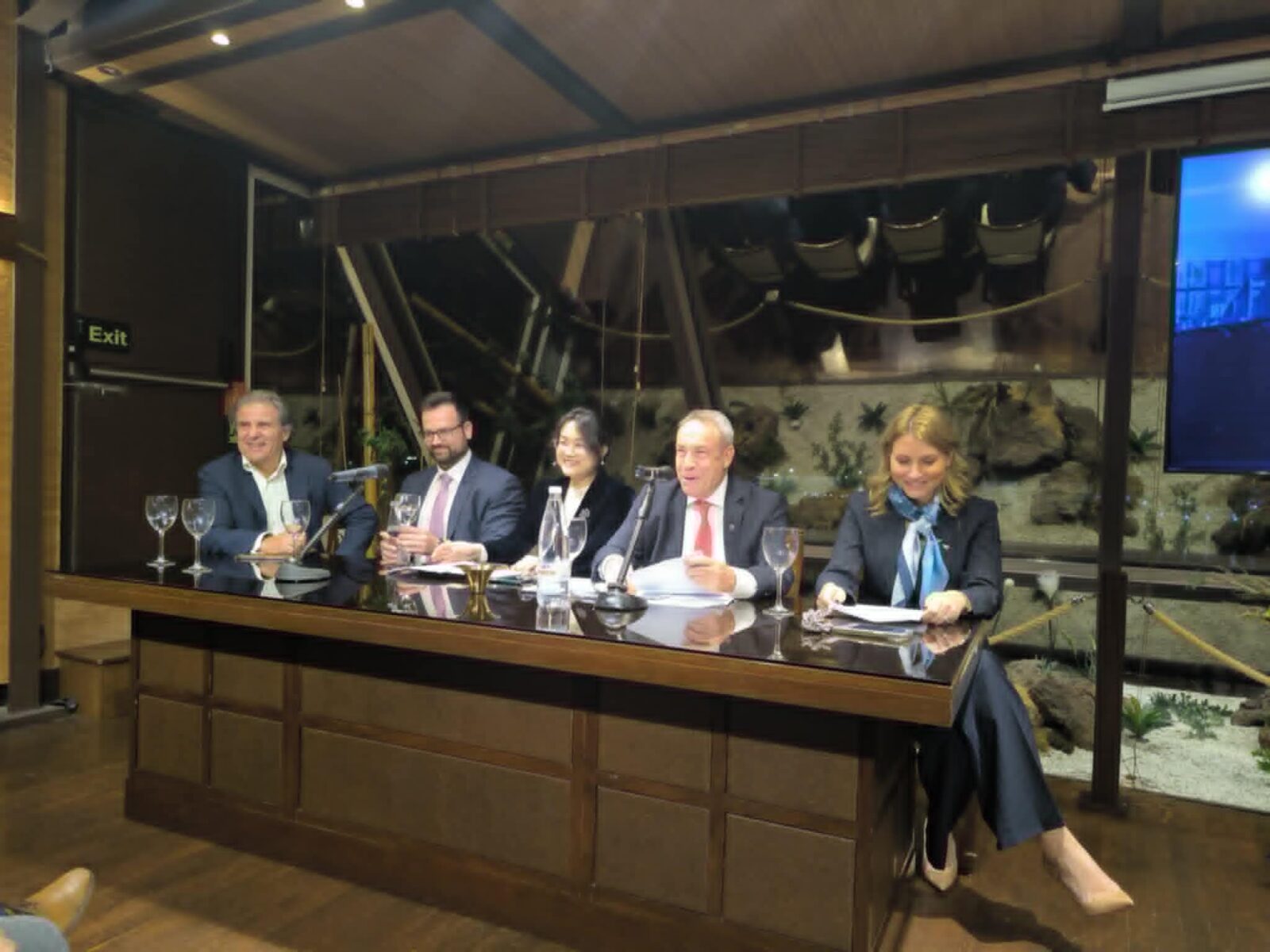
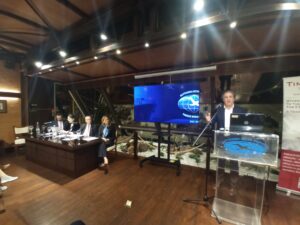
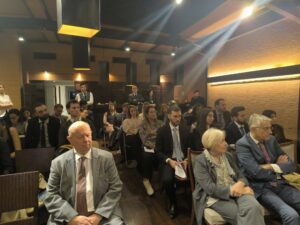
Greece VYAP – Greece Very Young Arbitration Practitioners was pleased to host an evening dedicated to the evolving landscape of Maritime Law and Arbitration, held during the Athens Arbitration Days.
Venue: PiraeusMarine Club,Piraues, Greece
The event opened with remarks by:
⚖️ Jon Elvey, President, LMAA London
⚖️ Dr. Antonios Tsavdaridis, Head of Arbitration, Rokas Law Firm
⚖️ Stefanie G. Efstathiou, LL.M. mult., CIPP/E, Co-Chair, Greece VYAP
Two expert panels, moderated by Nicholaos Gerassimou, Vice President of the Hellenic Association of Maritime Law, will explore cutting-edge developments in the sector — from autonomous vessels and digital bills of lading to ESG compliance, P&I claims, and sanctions in maritime operations.
Speakers:
• Dr. iur. Stavroula I. Angoura LL.M. (Athemar Maritime S.A.)
• Konstantinos Grigoriadis (The London P&I Club)
• Alexia-Anna Kalafati (NorthStandard)
• Dimitrios Kyriazis (Aristotle University of Thessaloniki (AUTH))
• George Lambrou FCIArb (George Lambrou Arbitration)
• Spyridon Leonis (Timagenis Law Firm)
• Zoi Maria Sofronidou (Gard AS)
• Jie Tai (Reiz Law Firm, China)
Organizer:GreeceVYAP
Stefanie Efstathiou,Co-Chair GreeceVYAP
OpeningAddresses 19:05 – 19:20
Jonathan Elvey,President of the London Maritime Arbitrators Association (LMAA)
19:20–19:35
Dr.Antonios Tsavdaridis, Head of Arbitration (RokasLawFirm)
19:35–20:45 MainPanel Discussion
Moderator
Nicholaos Gerassimou,VicePresident of the Hellenic Association of Maritime Law

Emerging Legal and Technological Challenges in Maritime Disputes
Topics&Speakers:
- Legal Aspects regarding the Operation of Autonomous and Unmanned Vessels- Stavroula Angoura, Attorney-at-Law (Athemar Maritime S.A.)
- Electronic Bills of Lading and Block chainin maritime trade–JieTAI,GlobalPartner(Reiz Law Firm, China)
- From Brussels to the High Seas: the extraterritorial application of EU ESG standards in maritimeoperationsandthetenserelationshipbetweenmaritimearbitrationandEUlaw
Dimitrios Kyriazis, AssistantProfessor(AristotleUniversityThessaloniki)
- GeorgeLambrou,Independent Arbitrator (GeorgeLambrouArbitration)
The Role of P&IClub in Managing and Resolving Disputes: Sanctions and Risk Allocation
Topics & Speakers:
- The interplay between P&I claims handling and arbitration / Strategic considerations before trigger in garbitration/Common pitfalls and lessons learned from recentcases?– Alexianna Kalafati, FD&D Claims Senior Advisor (NorthStandard)
- How sanctions and compliance obligations (e.g. EU, UK, US) affect contractual performance and arbitration – Zoi Sofronidou, Lawyer (Gard AS)
- The interplay between P&I claims handling and arbitration / Strategic considerations before triggering arbitration – Konstantinos Grigoriadis, Claims Manager (London P&I Club)
- Practical implications for enforcement and award recognition – Spyridon Leonis, Attorney-at-Law (Timagenis Law Firm)

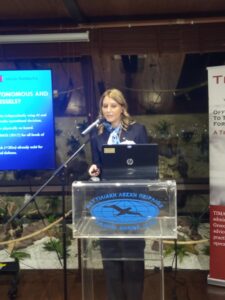
Dr. Stavroula Angoura, Attorney at-law, expert in maritime law
and arbitration introduce the subject:
“Legal Aspects regarding the Operation of Autonomous and
Unmanned Vessels’
Imagine a large commercial vessel sailing across the open ocean.
Her route is perfect. She avoids other ships. She adjusts to weather
conditions. Everything runs smoothly. And yet, there is no one on
board. No captain. No crew. Just sensors, software, and remote
supervision.
This may sound like science fiction, but it is quickly becoming a
reality. Autonomous shipping is no longer a distant vision—it is a
transformative shift that is already taking place in our oceans. For
shipowners, insurers, regulators, and everyone involved in maritime
transport, autonomous vessels represent a paradigm shift. They
challenge centuries of maritime law, which were built on the
assumption of humans physically present on the bridge.
And this brings us to the most fundamental questions:
Who is responsible if something goes wrong?
Who manages the risk?
How do insurance, charterparty obligations, and regulatory
compliance work when the crew is replaced by algorithms and AI?
Autonomous shipping is not merely about replacing people with
machines. It forces us to rethink responsibility, accountability, and
safety at sea. Maritime Autonomous Surface Ships, or MASS, are
already testing these boundaries, and today I want to guide you
through what they are, the challenges they bring, and how the law is
beginning to catch up.
- What Are Autonomous and Unmanned Vessels?
First, it’s important to clarify the terminology, because “autonomous”
and “unmanned” are not the same.
Autonomous ships operate independently using artificial
intelligence and advanced navigation systems. They can make
operational decisions on their own, such as avoiding collisions,
adjusting speed, or rerouting based on weather conditions.
Unmanned ships simply mean there is no crew physically on
board.
The internationally recognized term is Maritime Autonomous
Surface Ships, or MASS, officially adopted by the International
Maritime Organization in 2017. This term covers all levels of
autonomy, from ships that are mostly crewed but use AI for
navigation, to fully autonomous vessels with no human supervision
onboard.
Currently, small autonomous vessels, often less than 20 meters, are
already in use. They serve in scientific research, environmental
monitoring, and national defense.
Looking forward, studies suggest that by 2040, autonomous ships
under human supervision could make up 11–17% of the global
commercial fleet. Most of these vessels will operate on domestic
routes and are unlikely to carry passengers or hazardous cargo like
gas or chemicals in the near term.
But deployment is not just about technology, it is about trust. Public
confidence, investor confidence, and trust from charterers and
shippers are all critical. Can we rely on a vessel to make split-second
decisions at sea without a human captain? Can we trust AI to respond
correctly in unexpected situations, such as sudden storms or system
malfunctions? These questions are central to the adoption of
autonomous shipping.
The IMO categorizes ship autonomy into four levels:
- Level 1: Crewed ships with automated systems, where humans
monitor and can intervene.
- Level 2: Remotely controlled ships, but with crew on board
ready to step in if necessary.
- Level 3: Remotely controlled ships with no crew on board,
where human intervention is only from shore.
- Level 4: Fully autonomous ships, where AI handles all
operations and humans do not intervene in real time.
As we move from Level 1 to Level 4, the legal, operational, and
insurance challenges grow dramatically. With fully autonomous
vessels, the traditional assumptions of maritime law simply no longer
apply.
- Legal and Regulatory Challenges
Maritime law was written for humans on the bridge. Autonomous
ships raise a host of legal questions that the original drafters never
imagined. Let’s break down the main issues.
Legal Definition of a Ship
First, what is a ship? Surprisingly, there is no universally accepted
definition. Scholars and legislators have proposed various criteria:
buoyancy, the ability to move under its own power, carrying people or
goods, and operating in maritime waters.
Most experts agree that crew presence is not essential to define a
ship. National approaches vary:
In Greece, autonomous vessels are recognized as ships.
In France, the traditional definition of a ship includes being
“equipped and crewed,” which could have excluded autonomous
vessels.
International conventions such as MARPOL, the Hague-Visby
Rules, and the Athens Convention generally do not require
crew, which allows MASS to be recognized legally under
existing law.
This shows that while some legal frameworks are compatible with
autonomous vessels, others may need adaptation to account for
vessels without human crews.
Liability and Remote Operators
Next, consider liability.
Who is responsible if an autonomous ship causes an accident?
Remote operators, who run the ship from a Shore Control Center, are
often seen as the controllers. But are they considered crew? Are they
legally equivalent to the captain?
Under Greek law, the answer is no. Remote operators are not part of
the crew, and cannot act as the captain. This creates practical
dilemmas. Fully autonomous ships cannot fulfill duties traditionally
assigned to the master, such as providing assistance to shipwrecked
persons or other vessels in distress.
Liability may therefore be divided among multiple parties:
shipowners, software developers, remote operators, insurers, and even
charterers. Determining fault requires careful analysis of operational
logs, software behavior, and decision-making algorithms, a level of
complexity that maritime law has not fully addressed.
Insurance, Charterparty, and Documentation
Autonomous vessels also challenge the assumptions behind insurance
and charterparty agreements. Seaworthiness traditionally requires a
properly manned ship. Now, classification societies must certify
vessels that may operate entirely without humans, raising questions
about how to inspect and verify safety.
Bills of lading and ship certificates, historically issued by the master
or agent, will need to be fully electronic. The legal authority to issue
these documents must be clarified. These changes highlight that
almost every aspect of maritime law from liability to documentation
to insurance needs to be reconsidered for autonomous operations.
- International Efforts
Recognizing these gaps, the IMO launched the Regulatory Scoping
Exercise (RSE), completed in 2021. The exercise asked questions
like:
Can a ship without a captain be legally recognized?
How do watchkeeping and drills apply when there is no crew
onboard?
Can a remote operator be considered the ship’s master?
The RSE revealed significant gaps in existing law, prompting the
IMO to develop the MASS Code, a global framework for
autonomous shipping.
A voluntary version is expected by 2025, allowing early
adopters to operate within recommended guidelines.
A mandatory version is planned for 2028, which will establish
international standards for safety, liability, and digital
operations.
Countries are already preparing for this future. Denmark, Singapore,
Norway, and Panama have introduced fully digital ship certificates,
enabling autonomous vessels to operate legally without paper
documentation. Classification societies, insurers, and regulatory
authorities are gradually adapting to the reality that ships may no
longer carry a traditional crew.
The MASS Code will provide a uniform framework for autonomous
shipping, covering everything from remote operation protocols to
safety standards, liability rules, and cybersecurity measures. Its
adoption is essential for avoiding a patchwork of conflicting national
rules that could otherwise hinder the deployment of autonomous
vessels worldwide.
- Benefits of Autonomous Shipping
Despite the challenges, the benefits of MASS are enormous.
Autonomous vessels can:
Reduce human error, which is the leading cause of maritime
accidents.
Lower operational costs, because crew-related expenses are
reduced.
Enable new business models, including autonomous cargo
delivery and just-in-time shipping
Minimize environmental impact, through optimized fuel use and
route planning.
These advantages are driving significant investment in autonomous
shipping and pushing regulators, insurers, and maritime nations to
adapt quickly.
- Challenges to Overcome
However, for autonomous shipping to succeed, several key challenges
must be addressed:
Clear international legal frameworks to define liability and
operational standards.
Acceptance of sensor-based navigation and AI-driven
decision-making.
Strong cybersecurity measures to prevent hacking or system
failures.
Properly trained remote operators who can intervene
effectively when required.
Without addressing these issues, the potential benefits of autonomous
shipping may be limited, and the risks could outweigh the rewards.
- Conclusion
We are entering a new era in maritime transport. Ships can navigate
themselves. Operations can be managed from shore. Autonomous
vessels promise safer navigation, lower costs, and more sustainable
shipping.
But technology alone is not enough. The law must catch up. Insurance
frameworks, classification societies, international conventions, and
liability rules all need to evolve. MASS is not just a technological
innovation, it is a paradigm shift in maritime responsibility.
The next decade will determine how successfully autonomous
shipping is integrated into global trade. For regulators, insurers, and
operators alike, the challenge is clear: adapt or risk being left behind.
The future of shipping is autonomous, and it is arriving faster
than most of us realize.