


Location: Arabian Gulf / Strait of Hormuz / Gulf of Oman
Incident: Naval / Military activity
Level: Advisory
04 May 2026 [12:00 UTC]
AWARENESS OF INCREASED RISK IN SOUTHERN ARABIAN GULF, STRAIT OF HORMUZ, GULF OF OMAN
Significant Developments
04 May: US NAVCENT / NCAGS issued a ‘Conditions for Orderly Transit of the Strait of Hormuz’ notice, outlining an enhanced security area to support Strait of Hormuz transits south of the Traffic Separation Scheme (TSS). The notice warns of the presence of mines in the TSS and recommends routing via Omani territorial waters south of the TSS and coordination with Omani authorities via Ch16. The notice makes no provision for Naval escort of transiting vessels, despite a subsequent CENTCOM post detailing the transit of two US-flagged merchant vessels and the inbound transit of US Navy destroyers.
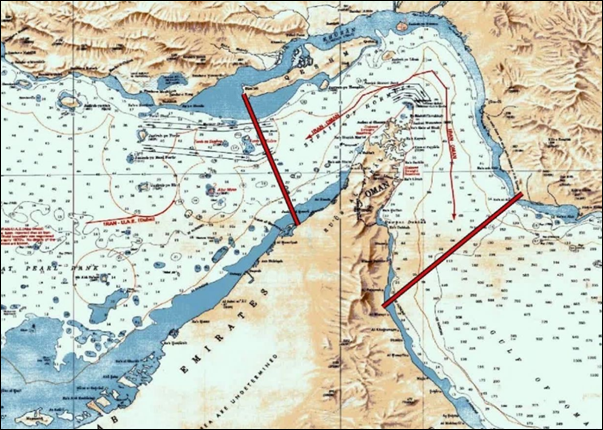
04 May: Iranian authorities issued a notice detailing a new area in the Strait of Hormuz controlled by the IRGC Navy (see image):
- From south of the line between Mount Mobarak, Iran and Fujairah, UAE.
- From west of the line between the end of Qeshm Island, Iran and Umm al Quwain, UAE.
EOS Intelligence Assessment
The risk assessment for Strait of Hormuz transits with Iranian permission is HIGH (an incident is likely) and EXTREME (an incident is highly likely) without permission. Iranian permission does not guarantee safe transit; vessels with permission have been challenged, threatened and attacked.
The inference of the Iranian announcement is that the US NAVCENT / NCAGS notice regarding passage via Omani TTW is null and void. While maintaining oversight of the Larak/Qeshm route north of the TSS, Iran is now reinforcing its claim to jurisdiction over the entire Strait of Hormuz and adjacent areas, including the areas off Ras Al Khaimah (and, potentially, Khor Fakkan and Fujairah) where vessels continue to anchor / loiter awaiting opportunities to transit. On 03 May, vessesls off Ras Al Khaimah were contacted by Iranian naval authorities and directed to move south towards Dubai (out of the ‘new’ Iranian zone of control); there is no evidence to date that vessels off Khor Fakkan or Fujairah have received similar directives.
This is the latest development in the ongoing competition between Iran and the US for control of the Strait of Hormuz. Currently, Iran has the upper hand – the IRGC, with a combination of threats and attacks, remains able to challenge the US narrative and maintain coercive control. The US, despite President Trump’s announcement of ‘Project Freedom’ (which does not include provision for US Naval escort), has not yet challenged Iran’s coercive control enough to improve industry confidence regarding Strait transits. Attacks against vessels in the Strait of Hormuz on 02 and 03 May further cement Iranian control and erode any confidence resulting from the ‘Project Freedom’ announcement.
- Further Iranian attacks on transiting vessels in the Strait of Hormuz are a realistic possibility in the short term (<1 week) if Iran seeks to maintain coercive control over the Strait of Hormuz.
- Attacks on vessels remaining off Ras al Khaimah / Mina Saqr are a realistic possibility in the short term (<1 week) if Iran seeks to maintain coercive control over the new Iranian zone of control.
- US military action against Iranian miiltary / naval targets is a realistic possibility in the short term (<1 week), and the likelihood is increasing; without a commitment to escort transiting vessels, degrading Iran’s military capability is one of the few options available to the US to challenge Iran’s coercive control.
- There is a SUBSTANTIAL risk of escalation in the short term (<1 week), with potential triggers including Iranian attacks on US Naval vessels and US strikes on Iranian military targets.
Guidance for Commercial Shipping
- We continue to recommend that vesselsdo notattempt transit of the Strait of Hormuz until further notice.
- We recommend that vessels consider relocating to alternative anchoring / loitering areas south of Ras al Khaimah, Mina Saqr.
- We recommend that vessels in the vicinity of Khor Fakkan and Fujairah monitor VHF communications carefully and make contingency plans for relocation south;while there is no evidence that Iran intends to direct vessels off the UAE’s Arabian Sea coast to relocate south, Khor Fakkan and Fujairah are both within the new Iranian zone of control, albeit close to its southern boundary.
- We continue to recommend that allvessels continue to maintain a 30nm standoff from US warships. This will avoid misidentification by the US warship and reduce the chances of mistaken targeting or ‘fly through’ by Iranian weapons should Iran attack the warship.
- We continue to emphasise that Strait of Hormuztransits based on bilateral, government-to-government agreements are not covered by this assessment, and vessels transiting on the basis of such agreements must do so based on their own or their government’s assessment of risk.
Vessels in the Arabian Gulf and Gulf of Oman should register with UKMTO and NAVCENT NCAGS for updates:
- NAVCENT NCAGS: +1-813-529-7108 (Primary/Watch Desk), +973-3986-4800 (Alternate), or m-ba-navcent-ncags@us.navy.milor m-ba-navcent-ncags-ice@navy.mil
- UKMTO: watchkeepers@ukmto.orgor +44 (0) 2392 222060. UKMTO advisories and warnings are available at https://www.ukmto.org/