




A harmonised global approach to biofouling management is essential.
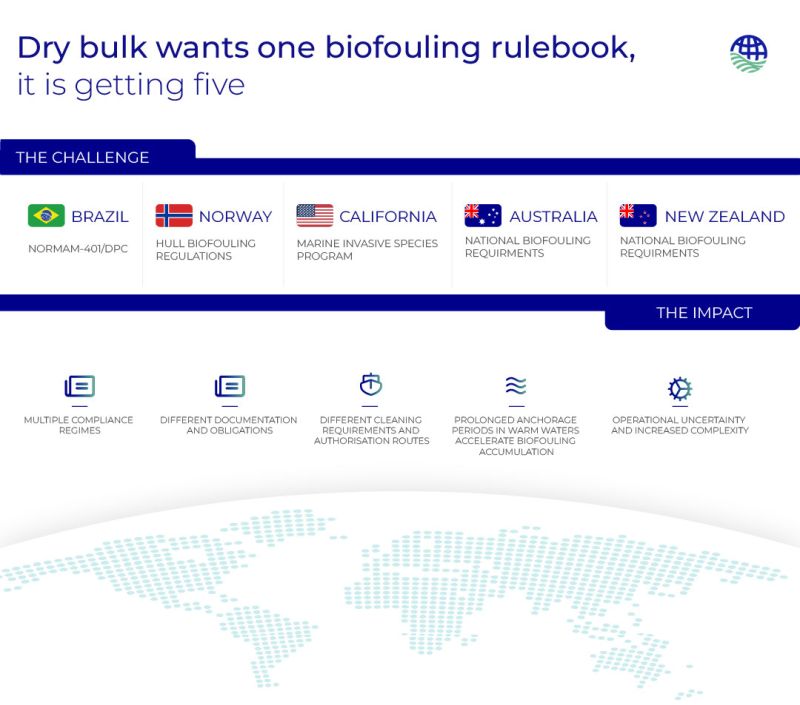
As the IMO progresses the development of a legally binding framework on biofouling management, INTERCARGO continues to advocate for the harmonisation of requirements to ensure vessels can operate safely and efficiently rather than forcing operators to manage different obligations on a port-by-port basis.
Through its dedicated Biofouling Working Group, comprising shipowner member representatives and associate member industry experts, INTERCARGO is contributing to the ongoing discussion by promoting the need for practicality to be written into the framework from the start, recognising the operational realities of the predominantly tramp trading model.
The increasing emergence of national and regional biofouling regimes ahead of an international framework highlights the importance of developing requirements that are practical, data driven and capable of consistent implementation. INTERCARGO also advocates for transparent, aligned and consistently applied measurement, together with an internationally agreed standard for cleaning systems, service providers, and ports or areas where cleaning operations are permitted. Conflict with the industry’s goals of reducing GHG emissions through optimizing underwater hull performance, should also be addressed.
As highlighted by INTERCARGO’s Nautical Affairs Manager, Alan Nugent MNI TechIOSH, a globally harmonised framework should support effective biofouling management whilst providing the clarity and consistency needed by ship operators navigating an increasingly complex regulatory landscape.
We are pleased to see the work of INTERCARGO’s Biofouling Working Group and Alan Nugent’s insights featured in the latest Riviera Maritime Media Ltd article.
Read the full article: https://lnkd.in/eucPwkAm